简体中文
简体中文 繁体中文
繁体中文

In the vast starry sky of the material industry, carbon fiber is hailed as the "Black Gold of the 21st Century". This slender fiber, with a diameter only one-tenth that of a human hair, has less than a quarter the density of steel yet 7 to 9 times its tensile strength. It serves as a core strategic material supporting high-end sectors including aerospace, wind energy and structural reinforcement. For a long period, this technology was tightly monopolized by a handful of overseas enterprises, becoming a critical bottleneck restricting the upgrading of China's high-end manufacturing. Today, from laboratory technical breakthroughs to mass production on factory lines, domestic carbon fiber is tearing down the monopoly barriers step by step through continuous technological progress, accelerating the full-industry independent substitution and composing a touching chapter of China's new material industry achieving a remarkable comeback.
Looking back on the development path of domestic carbon fiber, every step in the initial stage was extraordinarily tough. Back in the 1960s, China launched research on carbon fiber. However, constrained by technology, equipment and international blockade, the industry advanced at a snail's pace for decades. In the early days, high-performance carbon fiber required by domestic high-end fields was almost entirely imported. Not only was the price extremely high, but the supply stability was also completely controlled by external parties. Material demands in critical sectors such as aerospace and national defense were constantly at risk of supply cuts due to external technology regulations, while the upgrading of civil industries like wind energy and structural reinforcement was firmly restricted by the exorbitant cost of imported materials. It was precisely this predicament that inspired domestic research teams and industrial enterprises to make a desperate resolution for breakthrough, kicking off a decades-long technological breakthrough campaign.
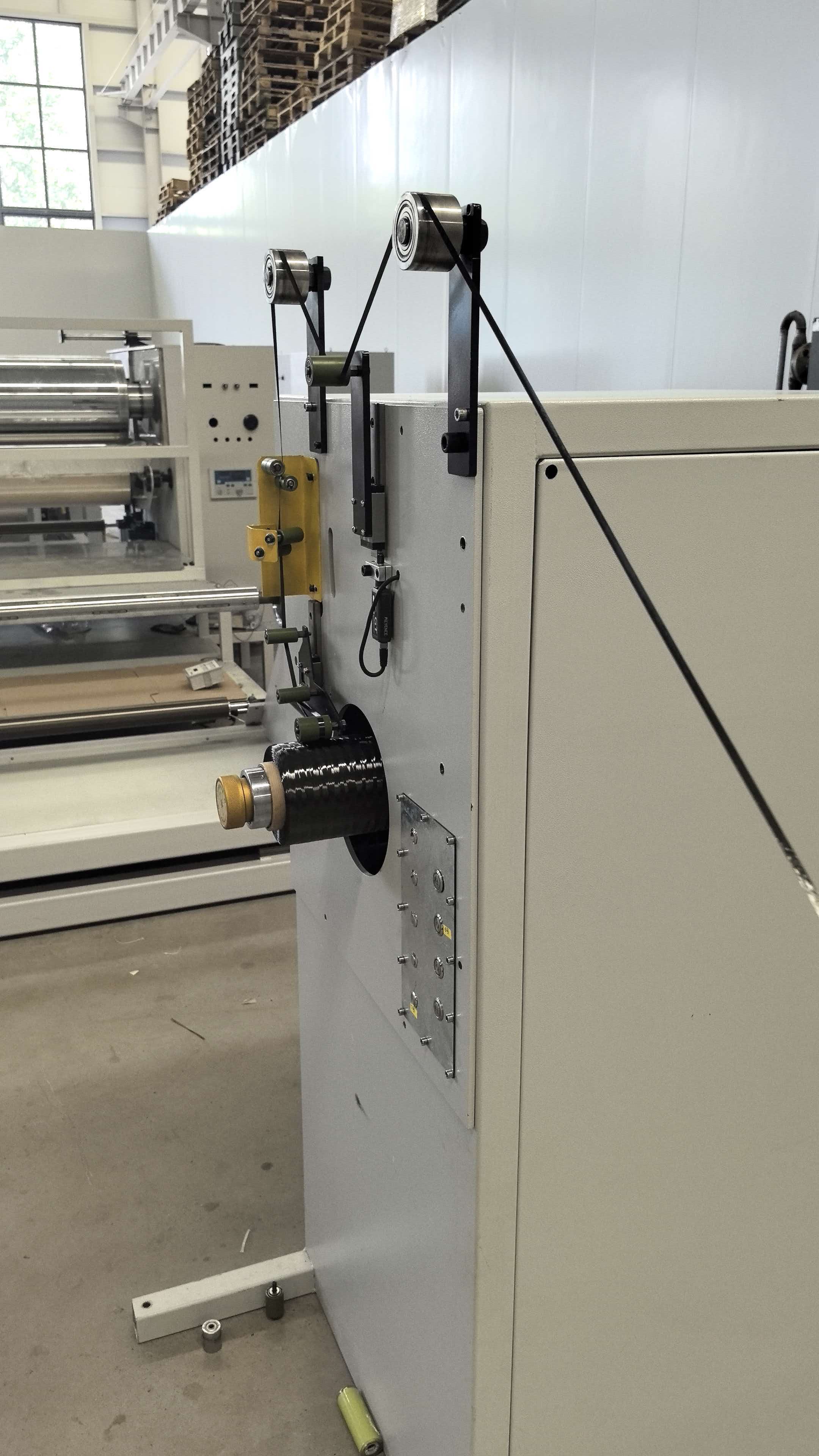
The core of this campaign lies in full-chain independent technological innovation. Starting from the upstream polyacrylonitrile precursor process, domestic enterprises explored the "dry-jet wet-spinning" technology from scratch, gradually optimizing spinning speed and controlling micro defects on fiber surfaces. Finally, they achieved stable mass production of large-tow precursors, completely breaking away from external dependence in the precursor link. In the carbonization stage, research teams repeatedly adjusted the temperature curve and tension control of high-temperature carbonization furnaces, overcoming a series of core challenges such as high-precision temperature control and uniform carbonization. This ensures that the tensile strength and modulus of every single carbon fiber can stably reach the international advanced level. Today, we have not only realized full mass production of T300 and T700 grade carbon fiber, but also continuously expanded the technological boundary: T800 grade carbon fiber has been widely applied in civil scenarios, T1000 grade ultra-high-strength carbon fiber has completed engineering implementation, and T1200 grade carbon fiber achieved hundred-ton mass production in recent years, officially bringing China's carbon fiber technology into the world's first tier.
The dividends of technological breakthroughs are rapidly transforming into an independent substitution wave across the entire industry. In the aerospace sector, small-tow carbon fiber that used to rely on imports is now fully applied in the fuselage structures of domestic large aircraft, the wing components of advanced fighter jets, and the main structures of commercial satellites. This significantly reduces structural weight and improves the maneuverability and endurance of equipment. In the wind energy sector, the large-scale application of domestic large-tow carbon fiber has cut the manufacturing cost of 100-meter wind turbine blades by over 40%. All mainstream domestic wind turbine manufacturers now adopt domestic carbon fiber as the core material for blade main beams, underpinning China's global leading position in the offshore wind industry. In the structural reinforcement sector, represented by Xinze Composite Materials, domestic enterprises have developed a full range of reinforcement materials based on independent carbon fiber technology. The complete domestic product matrix covering carbon fiber fabrics, epoxy structural adhesives and special grouting materials has completely replaced the previously imported reinforcement products, providing safe and reliable local solutions for the reinforcement and restoration of a large number of old bridges, buildings and water conservancy projects across China.
What is more gratifying is that this independent substitution is not a simple "import equivalent", but an industrial upgrading based on local scenario demands. Domestic enterprises no longer passively follow international standards. Instead, they develop customized dedicated carbon fiber products according to the demands of China's characteristic scenarios such as wind energy, infrastructure construction and low-altitude economy: anti-fatigue carbon fiber for offshore wind power, hydrolysis-resistant carbon fiber for water conservancy projects, and lightweight high-modulus carbon fiber for low-altitude aircraft. A steady stream of characteristic materials more adapted to the demands of China's industries have emerged, which in turn promote higher-quality development of downstream industries. Today, the domestic localization rate of carbon fiber in the Chinese market has exceeded 90%. The material bottleneck that once "strangled development" is becoming a new advantage for China to participate in global industrial competition.
From being blocked by technology to ranking first in global production capacity, the breakthrough path of domestic carbon fiber is a vivid epitome of China's high-end material industry striving for self-reliance. It clearly proves that core technologies can never be bought or begged for. Only by devoting ourselves to technological research and building a solid foundation can we take control of our own destiny in critical fields. In the future, with the continuous iteration of domestic carbon fiber technology, this path of independent substitution will extend further, from the material end to the application end, from the domestic market to the global market. The "Made in China" carbon fiber will eventually inject continuous Eastern momentum into the upgrading of global high-end manufacturing.