

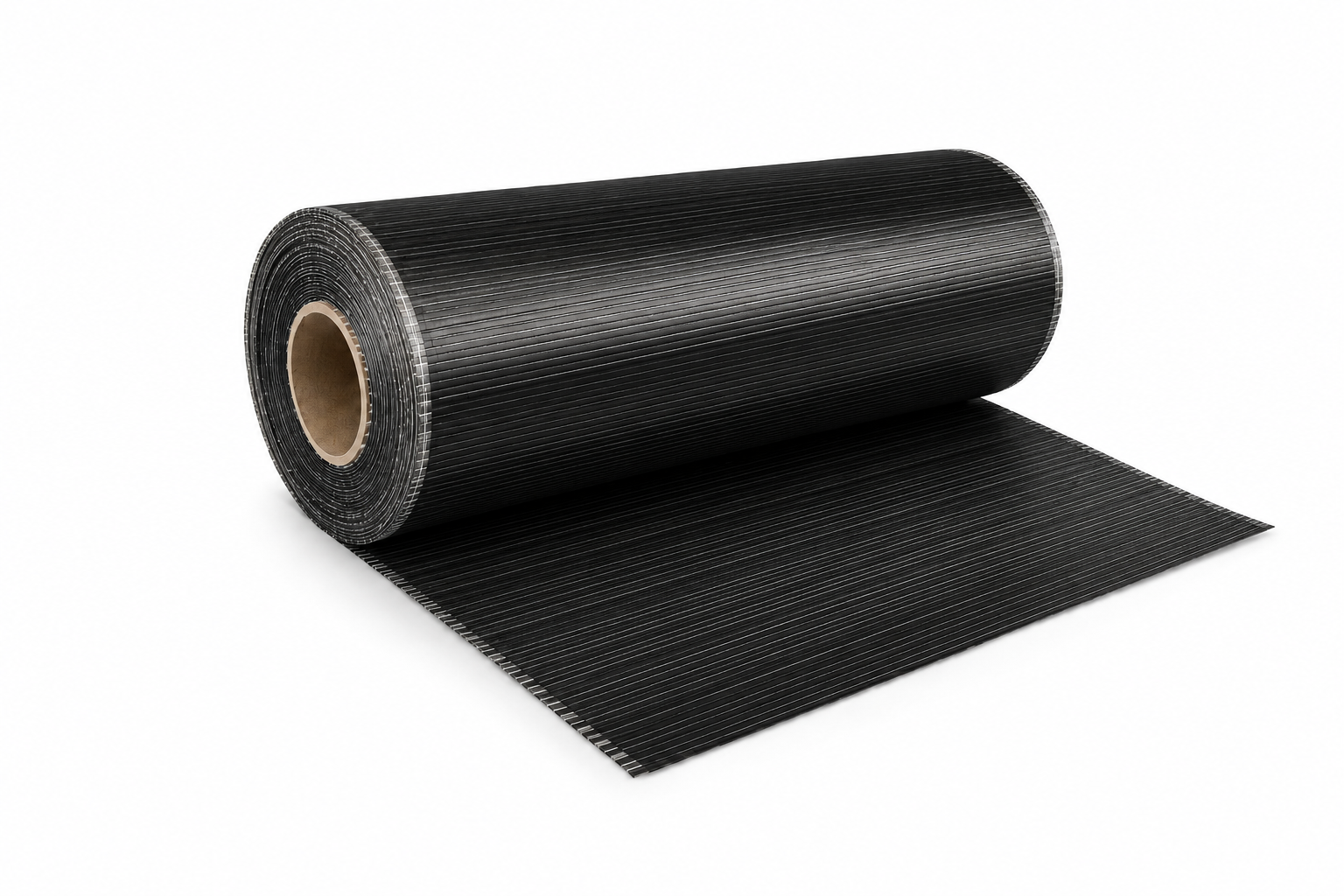
Basalt Fiber Cloth (Unidirectional Construction Cloth)

Basalt Fiber Cloth (Unidirectional Construction Cloth)

Unidirectional basalt fiber cloth is made from natural basalt ore through high-t
Send Inquiry
Product details

Unidirectional basalt fiber cloth is made from natural basalt ore through high-temperature melting, drawing, weaving and other processes, belonging to a green and environmentally friendly high-performance fiber material. The product has extremely high tensile strength (up to more than 2000MPa) along the fiber direction, with an elastic modulus close to that of steel. It also has acid and alkali corrosion resistance, high temperature resistance (long-term service temperature up to 650℃), anti-aging properties, non-conductive and non-magnetic, adapting to structural reinforcement requirements under complex working conditions.


In the field of building reinforcement, unidirectional basalt fiber cloth can replace traditional carbon fiber cloth for bending and shear reinforcement of concrete beams, slabs and columns, as well as wall crack control and seismic reinforcement. It is convenient for construction, and only needs to be matched with special basalt fiber impregnation adhesive to achieve efficient bonding with concrete substrates, greatly improving the bearing capacity and durability without increasing the self-weight of the structure.


Compared with carbon fiber cloth, basalt fiber cloth has lower cost and better alkali resistance, especially suitable for construction projects in harsh environments such as humidity and salt and alkali. It is a new structural reinforcement material with both cost performance and reliability. Our products have passed the testing of national authoritative institutions, meeting the requirements of the "Technical Code for Application of Fiber Reinforced Composites in Construction Engineering", and can provide complete construction guidance and technical support.

Q: What construction reinforcement applications are suitable for carbon fiber fabric?

A: Carbon fiber fabric is widely used for strengthening concrete beams, slabs, columns, bridges, tunnels, industrial buildings, and cracked floor structures. It is lightweight, high-strength, corrosion-resistant, and easy to install. When used with Grade-A carbon fiber impregnating adhesive, it can effectively improve structural bearing capacity and long-term durability.

Q: What is the difference between carbon fiber plate and carbon fiber fabric?

A: Carbon fiber plate offers high stiffness and high tensile strength, making it suitable for bridge, floor slab, and beam reinforcement. Carbon fiber fabric is more flexible and is better suited for beam-column joints, irregular structures, curved surfaces, and large-area bonding reinforcement. The proper material should be selected according to the structural load, construction conditions, and engineering requirements.

Q: What should be noted during carbon fiber reinforcement construction?

A: Before construction, the concrete substrate should be cleaned and kept solid, flat, dry, and free of oil or dust. During installation, primer, leveling adhesive, and impregnating adhesive should be applied according to the specifications to ensure that the carbon fiber material is fully saturated and firmly bonded to the substrate. Proper curing should be carried out after construction to avoid early moisture, contamination, or loading.

Product Inquiry

Whatsapp

Skype

VK

Send Inquiry